01
Go in blind
The target remains private and unreachable. No clues, no peeking and no moving the goalposts.
01Remote viewing begins with a clean test. We hide a target. You record the first shapes, textures and impressions that enter your mind. Only then is the image revealed—and your results build across time.
Intelligence community records
STAR GATE COLLECTION
1972–1996
Records span
11,985
Documents reported
89,901
Pages reported
20+ years
Programs and review
SUBJECT: Remote viewing sessions, training, operational tasking and program assessment.
PROGRAM NAMES: SCANATE · GRILL FLAME · CENTER LANE · SUN STREAK · STAR GATE
THE DATA CLEARED CHANCE. THE METHOD REMAINED THE CHALLENGE.
Archive counts are reported in a CIA response dated March 16, 2006. Read the primary document. The archive documents the program. The evidence claim below is tied to its commissioned statistical review—not merely to the archive's existence.
Blind by design
No target details before your submission locks.
Immediate reveal
Compare impressions while the session is fresh.
Results tracked over time
Build a real pattern—not a score from one lucky session.
A twenty-second demonstration
Do not name the target yet. Notice the raw elements, form a picture in your mind, then reveal this public demonstration image.
Recorded before reveal
What image forms in your mind?
A tower? A cliff? A silo? Naming can pull you away from the raw information. Hold the fragments lightly.
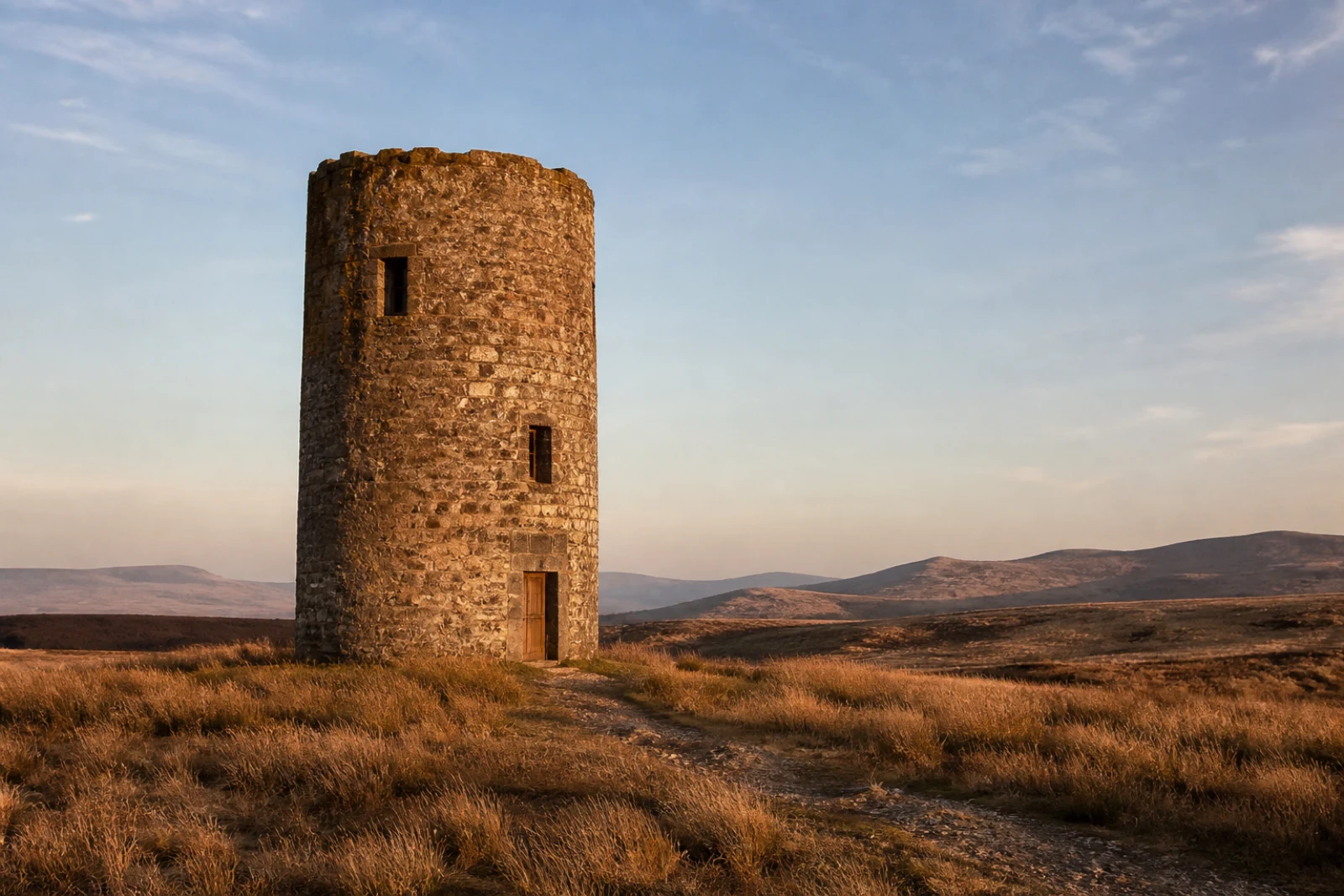
Target sealed
The mechanism
Remote viewing becomes confusing when people rush to name what they sense. The app keeps you with the first fragments, protects the blind, and gives feedback immediately.
01
The target remains private and unreachable. No clues, no peeking and no moving the goalposts.
0102
Sketch shapes and note textures, colours, temperatures or movement before turning them into a story.
0203
Freeze the submission, open the target and compare what corresponded with what imagination added.
03The systematic method project
A spectacular story cannot tell us what works. Thousands of comparable blind observations can help us test the conditions, techniques and confidence patterns that make signal easier to recognise.
That is the research ambition—not a claim that reliable on-command performance has already been achieved.
01
Rest, sleep, time and spacing become structured context instead of forgotten details.
02
The submission is timestamped before the confidential target can be reached.
03
Performance is compared with a real chance baseline across sessions, never graded once.
04
Patterns can become pre-registered studies; supported and null findings are both published.
Your results do not disappear into a notebook.
Eligible practice builds private signal and calibration records. After 20 sessions, an established high score can enter the worldwide standings. Research participation remains explicit and opt-in.
What the evidence shows
In the government-commissioned 1995 review, statistician Jessica Utts concluded that psychic functioning had been established under ordinary scientific standards. She reported results far beyond chance and effects of similar magnitude replicated across laboratories.
Even the review's critic, Ray Hyman, accepted that the statistical results were far beyond chance expectations; the dispute was what those statistics establish about the cause. For a viewer, the productive question is no longer whether to take the effect seriously. It is how to separate signal from noise and make the signal repeatable.
The measured effect
Utts reported a small-to-medium replicable effect and concluded that chance, methodological flaws and fraud did not readily explain the consistency of the results.
Read the commissioned statistical review ↗The problem to solve
The same evaluation did not establish dependable intelligence utility. This platform is built to close that practical gap: track the effect, identify conditions and test what makes it repeatable.
Read the operational evaluation ↗Choose your mystery
Start with one confidential photographic or synthetic target and immediate feedback.
Explore →⌖Describe a location you have not been shown, then reveal the provenanced place.
Explore →◇Commit a prediction before the independently sourced outcome exists.
Explore →◎Set an intention, become quiet and record what arrives. Never graded or scored.
Explore →≋Join synchronized sessions with expectation controls and transparent reporting.
Explore →✦Share sessions, discuss cases and explore source-linked guides and history.
Explore →From evidence to ability
Controlled testing gives us evidence of an effect. A properly blinded personal record shows you what happens in your own sessions. Systematic practice can then answer the question that matters: which state, method and kind of impression helps you receive the clearest signal?
Explore the evidence and method →Government-commissioned reviewers agreed that controlled results were far beyond chance expectations. Statistician Jessica Utts concluded that psychic functioning had been scientifically established; Ray Hyman accepted the statistical departure from chance while disputing what caused it. The practical question is how to recognise and reproduce the signal.
No label or prior belief is required. The practice begins with ordinary sensory fragments—shape, texture, temperature, colour and movement—recorded before your analytical mind turns them into a story.
No. A live target is kept on private storage and is unreachable until your submission is locked. Candidate sets used for later statistical analysis never appear in the viewer experience.
That is normal. The information may not get through on a given attempt. You still receive the reveal, and the session is never stamped with a harsh pass, fail or single-session score.
No. The platform includes provenanced photographs, verified places and quality-controlled synthetic scenes. Synthetic images are always labelled, carry no coordinates and are never represented as real locations.
Yes. Eligible blind sessions build two longitudinal measures: signal relative to chance and calibration of your confidence calls. Nothing is scored from one session, public high scores require at least 20 eligible sessions, and formal research use requires separate consent.
There is one way to make the evidence personal
No card. No commitment. No result labelled a failure.